
How to Launch a Builder Website in 30 Days (Without Cutting Corners)
You're opening a new community in six weeks. The sales team needs leads. Marketing needs a place to send traffic. Leadership wants the website updated yesterday.
The Timeline Problem Every Builder Knows
You're opening a new community in six weeks. The sales team needs leads. Marketing needs a place to send traffic. Leadership wants the website updated yesterday.
Then you call your web agency, and they tell you the project will take four to six months.
This is one of the most common frustrations in home builder marketing. The business moves fast — communities open, inventory changes weekly, new floor plans launch — but the website can't keep up because the build process wasn't designed for that speed.
The result? Communities launch without proper digital support. Sales teams rely on word of mouth and drive-by traffic instead of online leads. And the marketing manager spends months managing a web project that should have been done before the model home was framed.
It doesn't have to work this way. A fully branded, fully functional builder website can go from kickoff to live in 30 days — with community pages, floor plan libraries, interactive lot maps, and CRM integration included.
Here's how that timeline actually works, what makes it possible, and what separates a fast launch from a rushed one.
Why Traditional Website Builds Take So Long
Before understanding how a 30-day launch works, it helps to know why the traditional approach takes three to six months.
Everything Is Built From Scratch
In a typical agency engagement, every element of the website is designed, coded, reviewed, and revised as a one-off project. The homepage, community pages, floor plan templates, contact forms, lot availability — each component is custom-built for that single client.
This approach produces unique results, but it's inherently slow. Every decision requires a round of design mockups, client review, revisions, development, QA, and more revisions.
Too Many Stakeholders, Not Enough Decisions
Agency projects often involve multiple stakeholders on both sides — designers, developers, project managers, account directors on the agency side, and marketing, sales, leadership, and sometimes ownership on the builder side.
Each round of feedback loops through multiple people. A decision that could be made in one meeting takes two weeks of email chains.
Builder-Specific Features Require Custom Development
When a generalist agency builds a home builder website, they're often creating builder-specific features for the first time. Community page structures, floor plan filtering, lot availability displays, CRM integrations — these need to be engineered from scratch because the agency's standard toolkit doesn't include them.
That custom development adds weeks or months to the timeline and introduces technical risk. Features that should work seamlessly on day one are still being debugged at launch.
No Reusable Foundation
Every project starts at zero. The agency doesn't have a home builder website platform to build on — they have a blank canvas. The work done for the last builder client doesn't carry over to the next one. There's no compounding efficiency.
What Makes a 30-Day Launch Possible
A 30-day timeline isn't about moving faster through the same process. It's about using a fundamentally different approach — one built on a platform designed specifically for home builders.
A Pre-Engineered Platform
The biggest time savings come from not starting from scratch. A builder-specific website platform already has the core architecture in place:
- Community page templates structured around how builders organize and sell neighborhoods
- Floor plan display systems with specs, pricing, images, and filtering
- Interactive lot mapping built into the platform, not bolted on as an afterthought
- Lead capture forms that track which community and lot the prospect viewed
- CRM connectivity pre-configured for common builder CRMs like HubSpot and Lasso
Instead of building these features from the ground up, the platform provides them as part of the foundation. The 30-day process focuses on configuring, branding, and populating — not engineering.
A Focused Content Gathering Process
Most website project delays aren't caused by design or development — they're caused by content. Waiting for photography, floor plan specs, community descriptions, pricing, and lot information is what drags timelines from weeks to months.
A 30-day process accounts for this by starting content gathering on day one with a structured checklist. The builder knows exactly what's needed, in what format, by when. No ambiguity, no "we'll figure it out as we go."
Fewer Decision Points
Platform-based websites use a production library of pre-designed content blocks — proven layouts that work for builder websites. Instead of presenting three homepage concepts for review, the process starts with a library of options the builder selects from.
This isn't about limiting creativity. It's about eliminating the rounds of revision that consume weeks in a traditional engagement. The builder chooses the blocks that match their brand, the team customizes the styling, and the result is a polished site without the back-and-forth.
Builder-Experienced Team
When the team building your website has done it hundreds of times for the same type of business, they don't need a learning curve. They know what communities pages need to include. They know how floor plan data should be structured. They know where the CTA belongs on a community detail page.
That accumulated expertise compresses every phase of the project.
The 30-Day Timeline: Week by Week
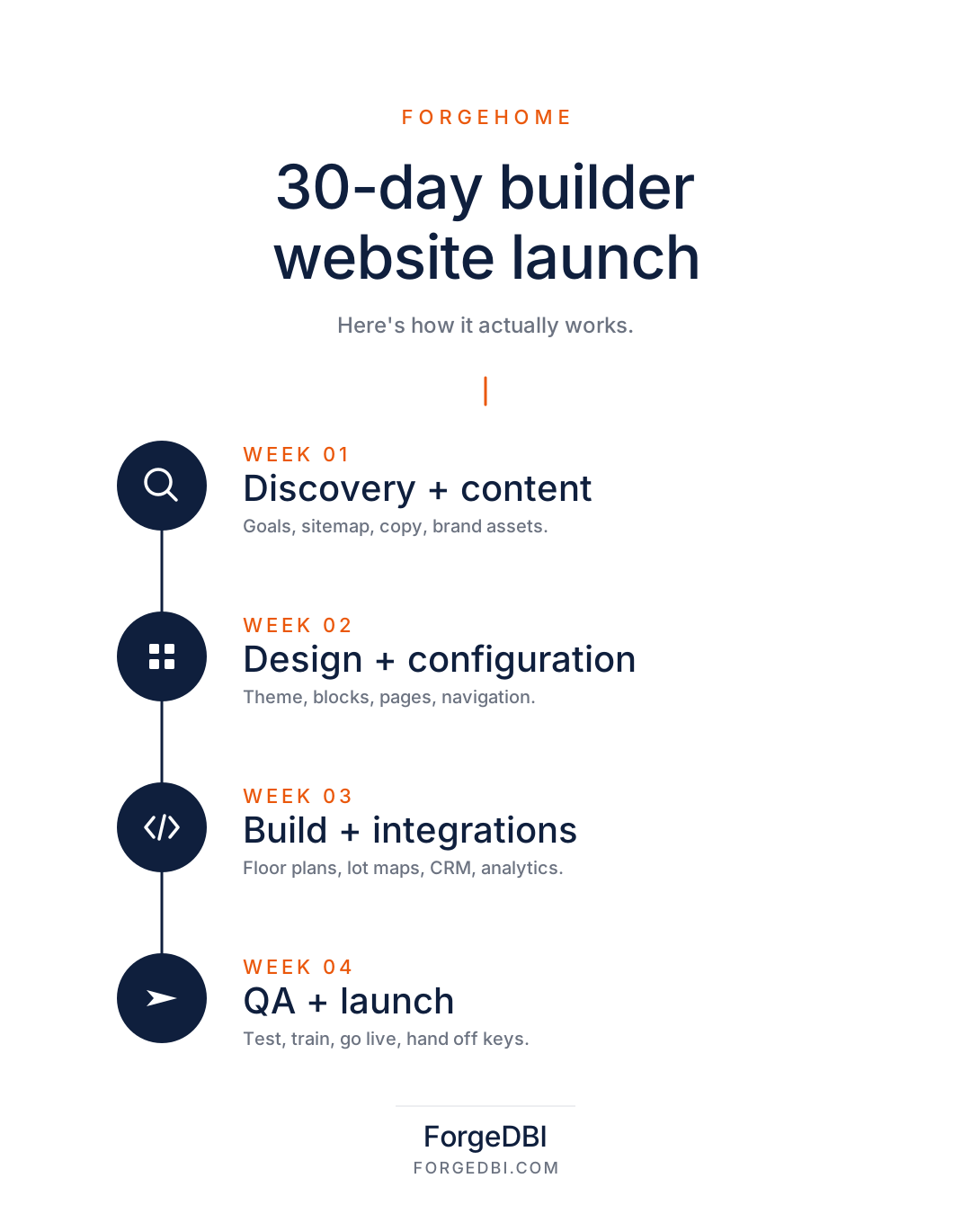
Here's what a realistic 30-day builder website deployment looks like, broken into four phases.
Week 1: Discovery + Content Collection
What happens:
- Kickoff call to align on goals, brand direction, and community structure
- Content checklist delivered: photography, floor plan assets, community details, pricing, lot information
- Brand assets collected: logo files, color palette, typography preferences
- CRM and integration requirements documented
- Sitemap and page structure finalized
What you're responsible for:
- Providing brand assets and photography
- Submitting community and floor plan data (specs, pricing, descriptions)
- Designating a single point of contact for approvals
Why it works in one week: The content checklist is specific to home builders — it asks for exactly what's needed in the format the platform requires. No guessing, no back-and-forth about what a "community page" should include.
Week 2: Design + Platform Configuration
What happens:
- Brand styling applied to the platform: colors, fonts, logo placement
- Homepage layout selected and configured from the production block library
- Community pages structured based on active communities
- Floor plan library populated with specs, images, and pricing
- Navigation and page hierarchy built
What you're responsible for:
- Reviewing the design direction (one round of feedback)
- Confirming community and floor plan data is accurate
Why it works in one week: The platform's block library eliminates the need for custom design mockups. Styling is applied to a proven structure, not invented from scratch.
Week 3: Build + Integrations
What happens:
- Interactive lot maps set up for each community (using PlotAtlas or equivalent)
- Lot data loaded: statuses, pricing, floor plan assignments
- CRM integration configured (HubSpot, Lasso, or webhook-based)
- Lead capture forms connected and tested
- SEO foundations set: meta titles, descriptions, heading structure, sitemap
- Mobile responsiveness verified across devices
What you're responsible for:
- Providing current lot availability data
- Testing CRM lead flow (confirming leads arrive correctly)
Why it works in one week: Interactive lot mapping and CRM integration are native platform features — not custom development projects. Configuration replaces engineering.
Week 4: QA + Launch
What happens:
- Full quality assurance review: every page, every link, every form
- Cross-browser and device testing
- Performance optimization (page speed, image compression)
- Final content review with the builder's team
- DNS configuration and domain connection
- Site goes live
- Dashboard training: how to update lot statuses, add communities, manage floor plans
What you're responsible for:
- Final approval on all content
- DNS access or domain transfer coordination
- Attending dashboard training session
Why it works in one week: QA on a platform-built site is faster because the underlying architecture has been tested across hundreds of deployments. The team isn't debugging custom code — they're verifying configuration.
What's Included at Launch
A 30-day deployment doesn't mean a stripped-down website. Here's what should be live on day one:
- Branded homepage with clear value proposition and CTAs
- Community pages for every active neighborhood, with descriptions, photography, and amenities
- Floor plan library with specs, pricing, images, and filtering
- Interactive lot maps showing real-time availability for each community
- About page with builder story, team, and credentials
- Contact page with lead capture form
- CRM integration feeding leads to your sales team
- SEO foundations — meta titles, descriptions, heading structure, XML sitemap
- Mobile-optimized experience across all pages
- Analytics tracking — Google Analytics and/or Tag Manager configured
- Dashboard access for your team to manage ongoing updates
This is a complete, conversion-ready website — not a placeholder that needs months of follow-up work.
Fast Launch vs. Rushed Launch: Know the Difference
Speed without quality isn't a win. Here's how to tell the difference between a genuinely fast deployment and a rushed one that will cost you later:
Fast Launch (Platform-Based)
Rushed Launch (Cutting Corners)
Builder-specific features are native to the platform
Features are stripped out to meet the deadline
Content is gathered through a structured checklist
Content is placeholder — "we'll add it later"
SEO foundations are set at launch
SEO is an afterthought — "we'll optimize later"
CRM integration is configured and tested
Forms collect leads but don't connect to anything
Interactive lot maps are live with real data
Lot availability is a static image or "coming soon"
Mobile experience is tested and polished
Site technically loads on mobile but isn't optimized
Team is trained on the dashboard
Team has no idea how to make updates
If your "fast launch" requires a second phase to add the features that should have been there from the start, it wasn't fast — it was incomplete.
When 30 Days Isn't the Right Fit
Transparency matters. A 30-day timeline works well for most regional builders, but there are situations where a longer timeline is warranted:
- Highly custom design requirements — If your brand demands a completely unique visual identity that can't be achieved through platform customization, a custom design phase adds time.
- Complex integrations beyond standard CRM — ERP systems, custom inventory feeds, or third-party data sources may require additional development.
- Large-scale sites with 20+ communities — More communities means more content to gather, populate, and verify. The process scales, but so does the content collection timeline.
- Content isn't ready — The 30-day clock starts when content is provided. If photography, floor plan assets, and community data aren't available, the timeline extends accordingly.
A good platform partner will be upfront about when the standard timeline applies and when adjustments are needed.
What Happens After Launch
Launching the website is the beginning, not the end. Here's what the ongoing partnership should look like:
Regular content updates — New communities, floor plans, and inventory changes should be reflected on the site within days, not weeks. With dashboard access, your team can handle most updates directly.
Lot map maintenance — As lots sell and new phases release, the interactive maps need to stay current. Real-time update tools make this a daily task that takes seconds, not a support ticket that takes days.
SEO growth — The foundations set at launch create a base to build on. Ongoing blog content, keyword optimization, and internal linking improve organic visibility over time.
Performance monitoring — Track lead volume, traffic sources, and page performance to identify what's working and where to adjust.
The Real Question Isn't Speed — It's Readiness
Every builder marketing manager has been in the position of needing a website faster than the traditional process allows. The frustration isn't about impatience — it's about the business need being real and urgent.
A new community is opening. The sales team needs online leads. The current site doesn't reflect the quality of the homes being built.
The 30-day timeline exists because the technology caught up with the need. Builder-specific platforms removed the bottlenecks that made website projects slow — custom engineering, generic design processes, and agency overhead.
The question isn't whether a 30-day launch is possible. It's whether your current approach is costing you leads every month it takes longer than it should.
ForgeDBI launches fully branded builder websites in 30 days on the ForgeHome platform — with community pages, floor plan libraries, PlotAtlas interactive lot maps, and CRM integration included. Model sites start at $3,000. Custom builds are available for builders who need more.
