
Why Regional Builders Are Ditching Agencies for Platform-Based Websites
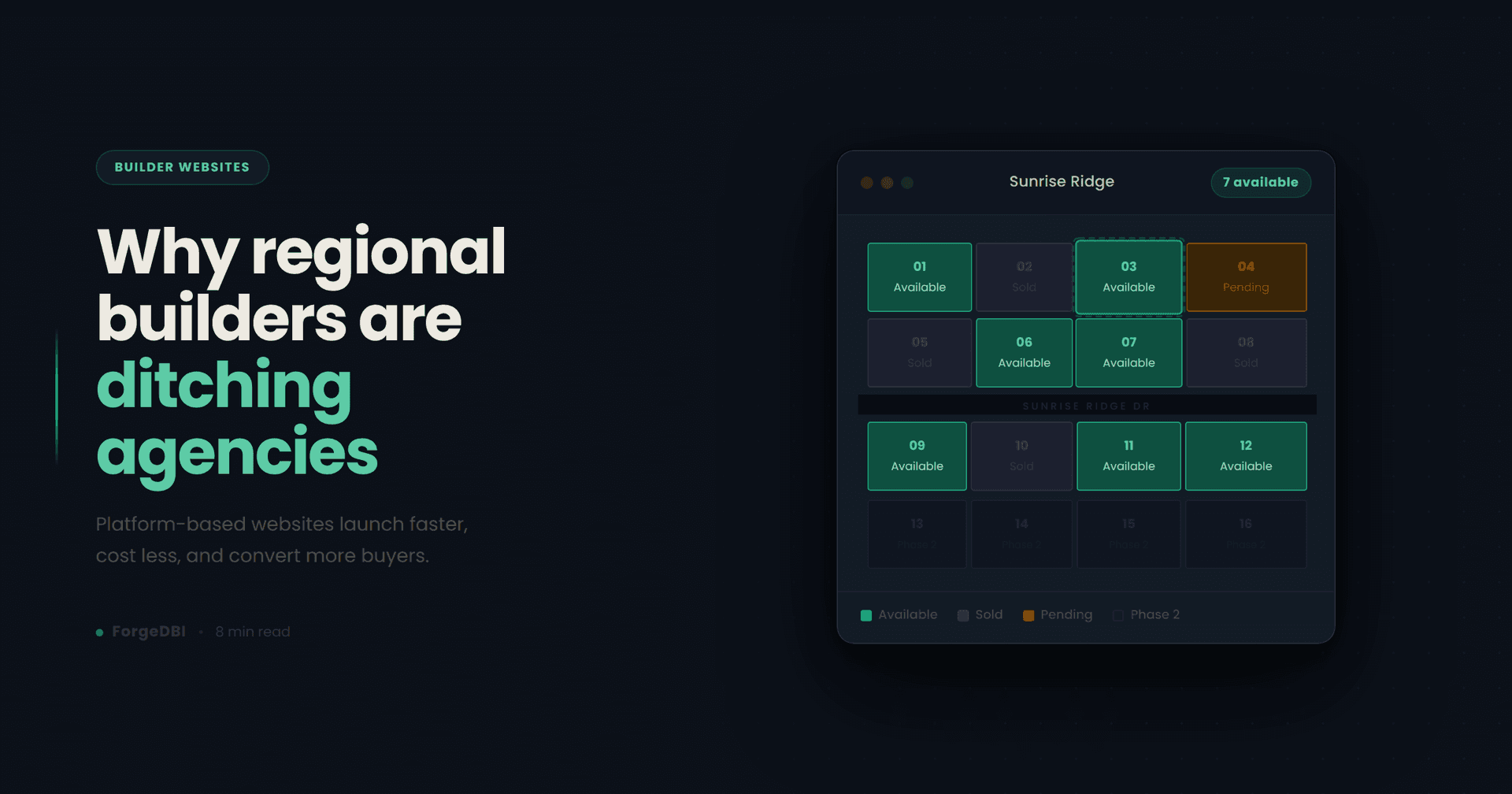
Today's homebuyers start their search online. They expect to browse available lots, filter by floor plan, check real-time pricing, and request information — all from their phone, a
The Agency Model Worked — Until It Didn't
For years, hiring a web agency was the default move when a home builder needed a new website. You'd find a firm, sit through discovery meetings, wait three to six months, and pay anywhere from $15,000 to $50,000 for a finished product.
And for a long time, that was fine. Builders didn't need much from their websites beyond a digital brochure — a few community photos, a contact form, maybe a floor plan PDF.
That era is over.
Today's homebuyers start their search online. They expect to browse available lots, filter by floor plan, check real-time pricing, and request information — all from their phone, all before they ever visit a sales center. The static brochure website can't keep up. And neither can the agency model that built it.
Regional home builders — the ones managing 2 to 20 active communities with marketing teams of one or two people — are feeling this shift the hardest. They need their websites to do more, but they don't have the budget, bandwidth, or patience for another six-month agency engagement.
That's why more of them are making the switch to platform-based websites built specifically for the home building industry.
What's Actually Wrong With the Agency Approach?
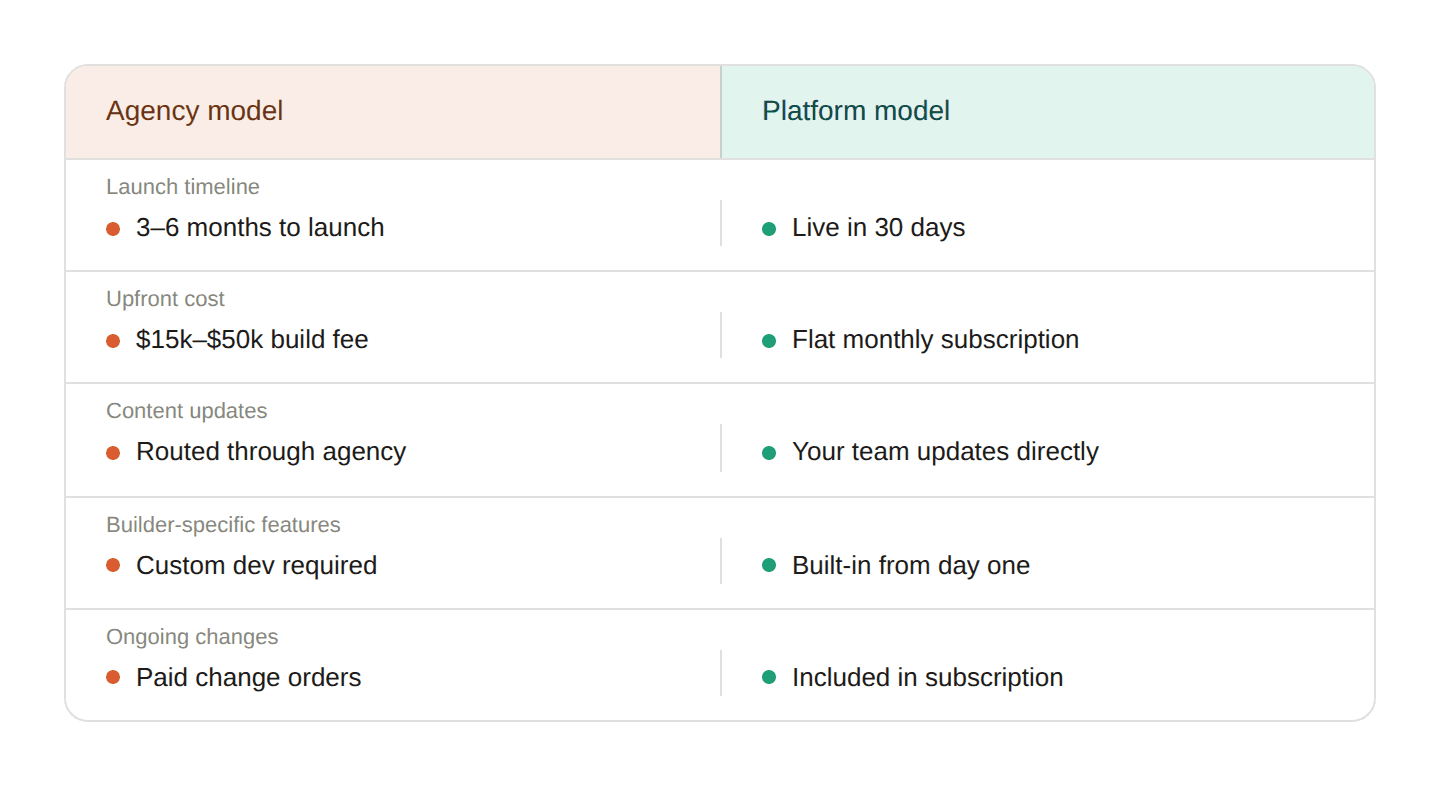
This isn't about agencies being bad at what they do. Many are talented. The problem is structural — the agency model wasn't designed for the specific, ongoing needs of residential home builders.
The Website Doesn't Speak Builder
Most web agencies serve dozens of industries. A builder website gets the same treatment as a law firm or a restaurant — generic templates with some custom styling layered on top.
What's missing? Community pages that match how builders actually organize their sales process. Floor plan libraries with specs and pricing. Interactive lot maps that show real-time availability. These aren't nice-to-have features for a home builder — they're fundamental to how buyers shop for new construction.
When your agency doesn't understand the builder sales funnel, you end up with a site that looks fine but doesn't convert.
Timelines Don't Match the Business
A builder's marketing calendar revolves around community launches. When a new neighborhood is opening, the website needs to be ready — with community details, lot availability, renderings, and floor plans — before the first buyer walks in.
Agency timelines of three to six months don't align with that reality. By the time the website is finished, the community has been selling (or struggling to sell) for months without proper digital support.
Cost Is Unpredictable
The upfront build is just the beginning. Need to add a new community page? That's a change order. Want to update lot availability? You're either waiting on the agency or paying hourly for edits. New integrations? Another proposal.
For builders on lean marketing budgets, these unpredictable costs make it nearly impossible to plan ahead.
Updates Require a Middleman
When a lot sells or a new floor plan becomes available, that information needs to be on the website immediately — not three days later after an email chain with your agency's project manager.
Builder marketing teams need direct control over their content, especially inventory-related content that changes weekly or even daily. Most agency-built sites don't offer that without going through the agency.
What Platform-Based Builder Websites Do Differently
A platform-based website is built on top of a system that was designed — from the ground up — for a specific industry. Instead of starting from scratch every time, the platform provides a pre-engineered foundation with the features, page types, and integrations that home builders actually need.
Here's how that changes the equation:
Builder-Specific Features Are Native
Community pages, floor plan galleries, model home showcases, interactive lot maps, and CRM integration aren't bolted on as afterthoughts. They're built into the platform from day one.
This means your website ships with the tools buyers expect — real-time lot availability, filterable floor plans, community-level detail pages — without custom development work.
Launch in 30 Days, Not 6 Months
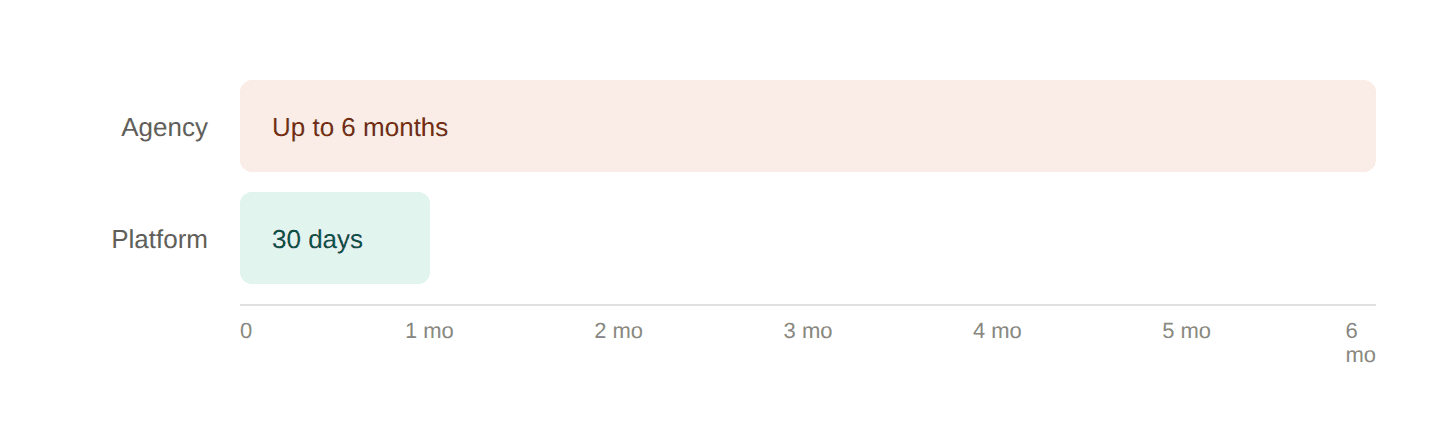
Because the platform already has the core architecture in place, deployment is dramatically faster. A builder-specific platform can take a website from kickoff to live in 30 days — fully branded, fully functional, with all communities loaded.
That matters when your next community is opening and your sales team needs online leads before the model home is built.
Flat, Predictable Pricing
Instead of a $20,000-$50,000 upfront project fee plus ongoing hourly charges, platform-based models typically use subscription pricing. You know exactly what you're paying each month, and that price includes hosting, maintenance, updates, and support.
For a regional builder budgeting annually, this predictability is significant.
Your Team Controls the Content
Platform-based websites give marketing teams direct access to update inventory, add communities, swap photos, and manage floor plans — without filing a ticket with an agency.
When a lot sells on Friday afternoon, the website reflects it by Monday morning because your team made the update directly.
Ongoing Support Without the Agency Overhead
Good platforms include white-glove onboarding and ongoing support as part of the subscription. You get the hands-on guidance of a dedicated team without the overhead of a full agency retainer.
Who Should Consider Making the Switch?
Platform-based builder websites aren't for everyone. They're specifically designed for:
- Regional production builders managing 2 to 20 active communities
- Marketing teams of one to three people who can't manage a complex agency relationship on top of everything else they own
- Builders who need speed — new communities launching and the website needs to keep pace
- Organizations tired of paying agency prices for features that should come standard in a builder website
If you're a national builder with a 20-person marketing department and a seven-figure digital budget, a custom agency build might still make sense. But for the vast majority of regional builders, the platform model is a better fit.
What to Look for in a Builder Website Platform
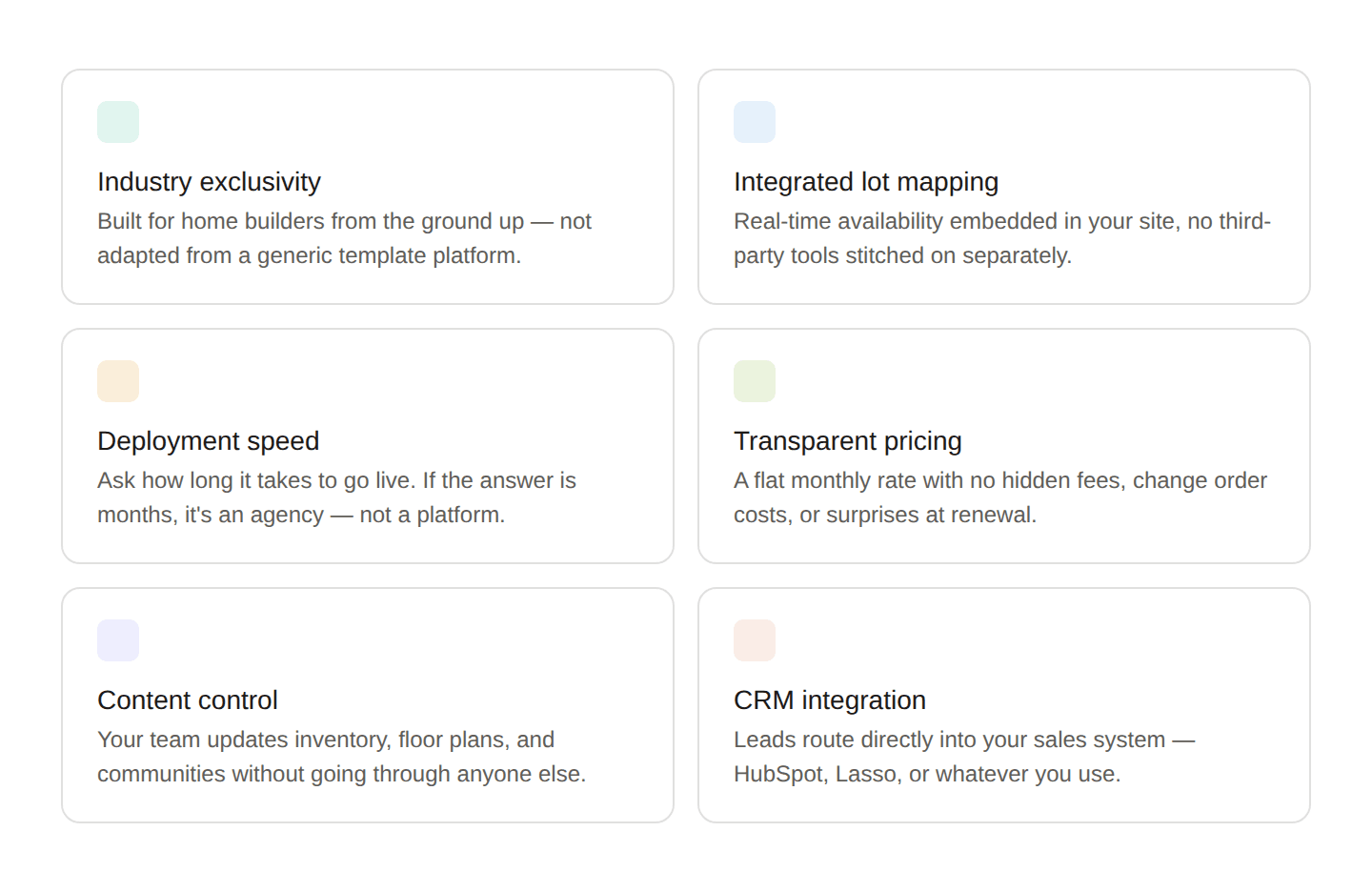
Not all platforms are created equal. If you're evaluating options, here's what to prioritize:
Industry exclusivity. Is the platform built exclusively for home builders, or is it a generic tool that's been adapted? The more focused the platform, the more likely it has the specific features you need without extra customization.
Integrated lot mapping. Can buyers see real-time lot availability directly on your website? Or does that require a third-party tool stitched on separately? Platforms with built-in interactive lot maps eliminate the need for separate vendors and create a smoother buyer experience.
Deployment speed. Ask about timeline. If the answer is "it depends" or "typically 8-12 weeks," you're looking at something closer to an agency experience than a platform.
Transparent pricing. You should know exactly what you're paying before you sign. Monthly subscription pricing with no hidden fees is the standard for modern SaaS platforms.
Content control. Can your team make updates directly, or do you need to go through a support team for every change? The best platforms give you a straightforward dashboard without requiring technical skills.
CRM integration. Your website should feed leads directly into whatever CRM your sales team uses — HubSpot, Lasso, or another system. If integration requires custom development, that's a red flag.
The Bottom Line
The agency model served home builders well for a long time. But the demands of today's homebuyer — real-time information, self-serve browsing, mobile-first experiences — have outpaced what most agencies are set up to deliver for this industry.
Platform-based websites built for home builders close that gap. They launch faster, cost less, and include the features buyers expect — without requiring your lean marketing team to manage a complex vendor relationship.
The builders making this shift aren't doing it because agencies are bad. They're doing it because a better model now exists.
ForgeDBI builds high-performing websites exclusively for residential home builders. Our ForgeHome platform deploys in 30 days with built-in community pages, floor plan libraries, and PlotAtlas interactive lot mapping — all for a predictable monthly subscription.
